It often starts with just one.
A small brown spot on the chest.
A rough patch near the neck.
Something on the back that feels almost as though somebody stuck a tiny piece of wax onto the skin.
At first, many people ignore it.
Then another appears.
And another.
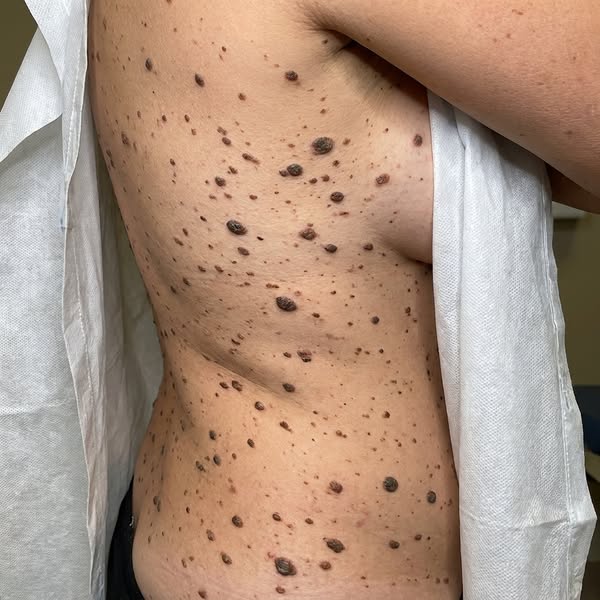
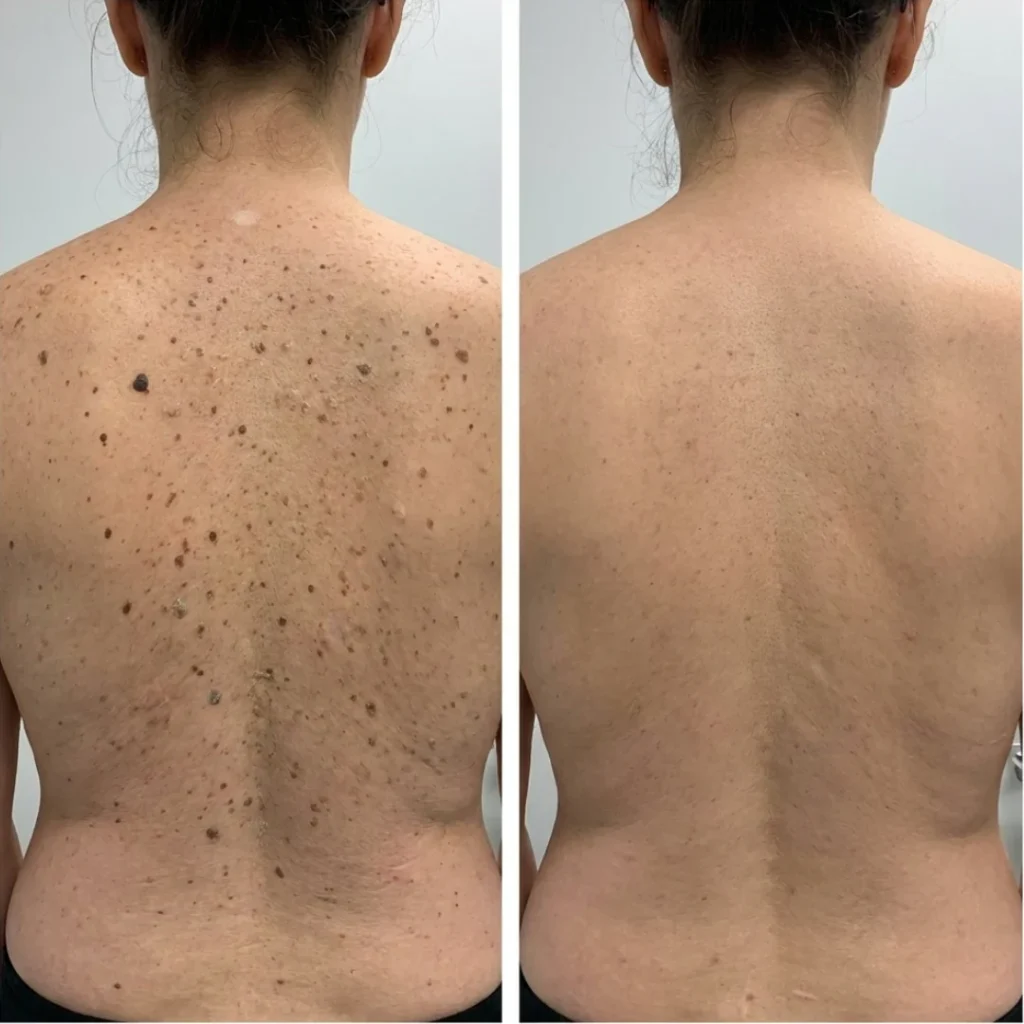
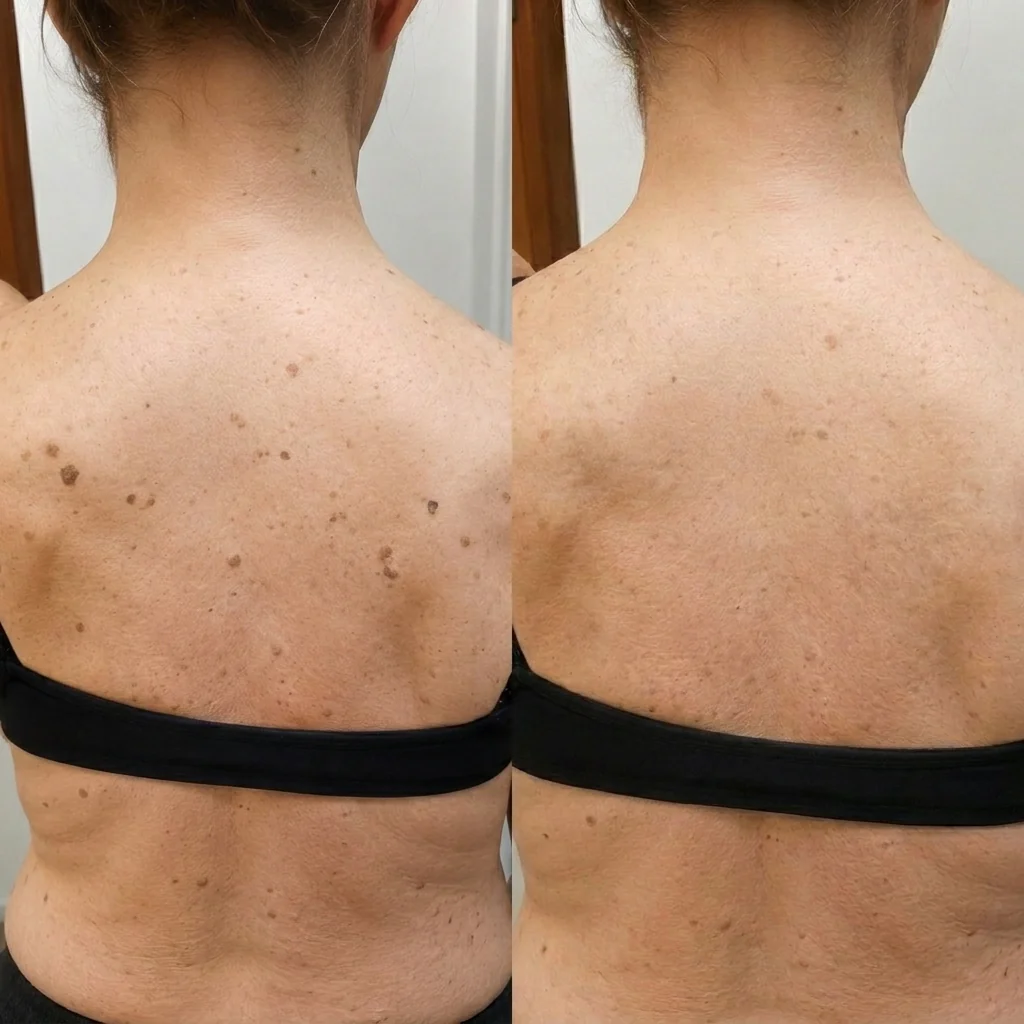
A few years later, some people suddenly realize they have dozens scattered across their chest, shoulders, neck or back.
They’re sometimes jokingly called “barnacles of aging.”
Their real name is seborrheic keratoses.
And if you’ve started noticing them after 50, you’re far from alone.
The American Academy of Dermatology says these harmless skin growths are especially common in middle-aged and older adults, and many people develop more of them as they age.
But there’s something important people often misunderstand about them.
They Can Look Alarming — Even Though They’re Usually Harmless
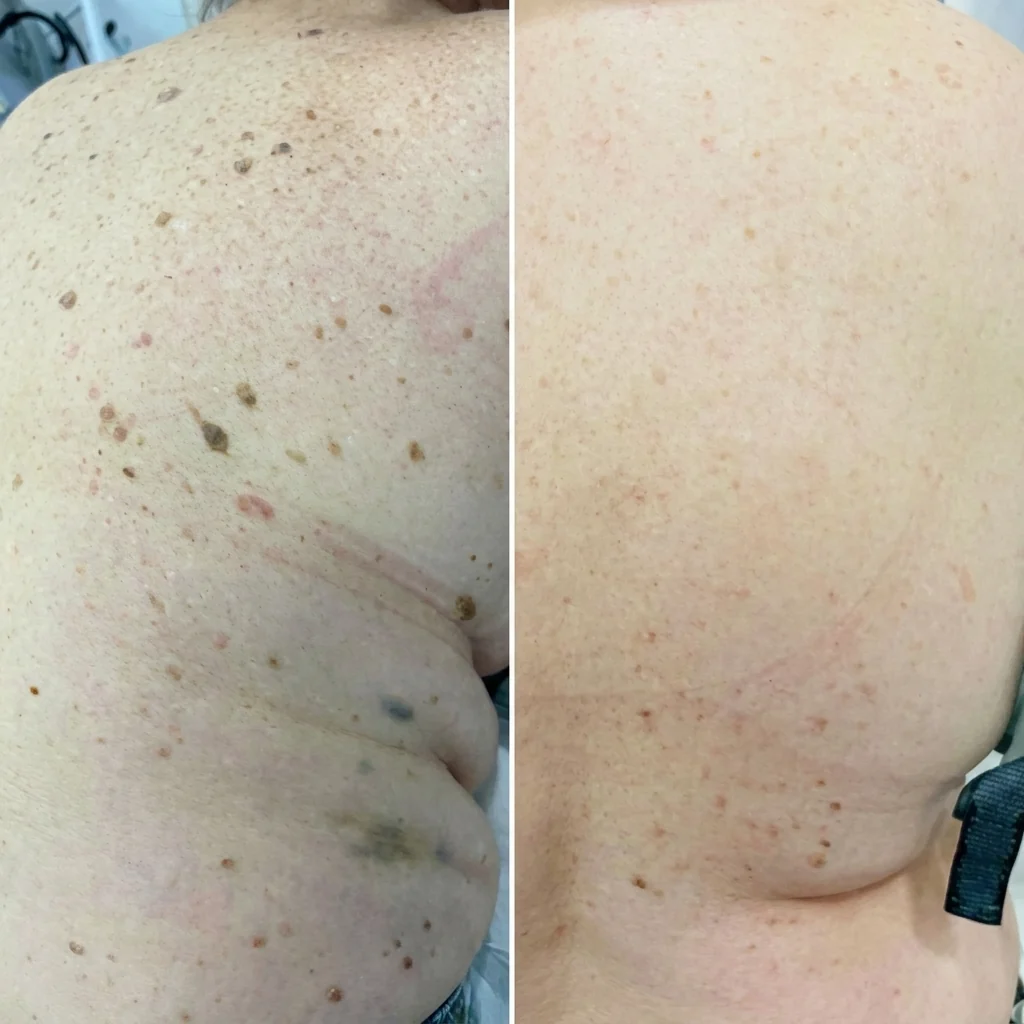
Seborrheic keratoses can look surprisingly different from one person to another.
Some are flat.
Others become thick and raised.
They can be tan, brown, nearly black or somewhere in between.
And one of their most recognizable features is their strange “stuck-on” appearance.
Mayo Clinic describes them as waxy or scaly growths that are often slightly raised and commonly appear on areas such as the face, neck, chest and back.
The reassuring part?
A typical seborrheic keratosis is benign, noncancerous and not contagious.
But that doesn’t mean every mysterious brown growth should automatically be dismissed as one.
That’s where things get important.
The Problem Is That Other Skin Conditions Can Look Similar
Most experienced dermatologists can often recognize a seborrheic keratosis simply by examining it.
But not always.
Some skin cancers and precancerous lesions can resemble harmless growths.
The American Academy of Dermatology notes that if a growth looks suspicious, a dermatologist may remove it so the tissue can be examined under a microscope.
That’s why a suddenly changing spot deserves more attention than another DIY treatment from the bathroom cabinet.
Especially watch for a growth that:
- Changes rapidly
- Bleeds
- Becomes unusually dark
- Looks significantly different from your other spots
- Develops a sore that doesn’t heal
- Suddenly appears alongside many new growths
Those are reasons to have the skin examined rather than guessing.
Why Do They Seem to Keep Appearing?
This is one of the most frustrating questions for people who develop lots of them.
And surprisingly, science still doesn’t have a simple answer.
The exact cause of seborrheic keratoses remains unknown.
What researchers do know is that they become increasingly common with age and can run in families.
The American Academy of Dermatology says some people appear to inherit a tendency to develop many of these growths. Sun exposure may also play some role, although seborrheic keratoses frequently appear on areas that have spent very little time in the sun.
So when someone has one growth professionally removed and later notices another nearby, it doesn’t necessarily mean the removed growth “spread.”
They may simply be someone whose skin is prone to developing more of them.
That’s an important distinction.
And No — They Aren’t Warts
Because they can become raised, rough and warty-looking, seborrheic keratoses are sometimes mistaken for ordinary warts.
But they’re different conditions.
Seborrheic keratoses aren’t caused by the human papillomavirus responsible for many common warts, and they aren’t contagious.
So you can’t “catch” them from somebody else.
And you aren’t spreading them around your own body by touching them.
Do They Actually Need to Be Removed?
Usually, no.
If a dermatologist is confident a growth is a seborrheic keratosis and it isn’t bothering you, it can often simply be left alone.
Mayo Clinic says treatment generally isn’t medically necessary.
But people commonly choose removal when the growth:
- Catches on clothing or jewelry
- Becomes irritated
- Itches frequently
- Bleeds from rubbing
- Sits in an uncomfortable location
- Or simply bothers them cosmetically
Dermatologists have several established ways of removing them.
The Traditional Options
One common method is cryotherapy, where liquid nitrogen freezes the growth.
It can work well, particularly on thinner lesions, although thicker raised growths may be more difficult to remove completely. Mayo Clinic also notes that cryotherapy can sometimes cause permanent pigment loss, particularly in darker skin tones.
Other options can include:
Curettage: scraping the growth from the skin.
Shave removal: carefully shaving off the lesion.
Electrocautery: using electrical energy to remove or destroy tissue.
Laser treatment: used in selected cases.
DermNet also lists focal chemical peeling with trichloroacetic acid among professional options.
But there’s one frustration none of these procedures can completely solve:
Removing today’s growth doesn’t guarantee that another won’t appear somewhere else later.
The underlying tendency to develop seborrheic keratoses can remain.
That’s Why At-Home Acid Products Are Suddenly Getting Attention
There’s now a growing category of skincare products built around ingredients such as glycolic acid, salicylic acid and urea.
One example attracting attention online is the Equalize Labs Smooth & Even Glycolic Body Stick.
According to the company’s current product page, the formula contains:
7% glycolic acid
1% salicylic acid
5% urea
10% shea butter
The idea is easy to understand.
Both glycolic and salicylic acid are exfoliating ingredients, while urea can help soften thick, rough skin.
Salicylic acid in particular is a recognized keratolytic, meaning it can soften keratin and help loosen thickened or scaly skin.
Glycolic acid is also widely used in dermatology and skincare as an exfoliating alpha-hydroxy acid.
That makes the chemistry behind these ingredients legitimate.
But here’s where consumers need to separate ingredient science from product-specific promises.
A Good Ingredient Doesn’t Automatically Prove Every Marketing Claim
Equalize Labs says its own study found visible improvement in flat seborrheic keratoses after 21 days and harder raised ones after 35 days.
The company says those claims are based on an eight-week study involving 85 participants.
Those are the manufacturer’s reported results.
They are not the same thing as large, independent clinical trials establishing the product as a standard medical treatment for seborrheic keratoses.
And major dermatology resources such as the American Academy of Dermatology and Mayo Clinic still describe professional removal methods such as cryotherapy, scraping, shaving and related procedures as established treatment options.
So it’s reasonable to be interested in an exfoliating skincare product.
It’s not reasonable to assume any cosmetic stick is guaranteed to erase every growth.
There’s Another Reason to Be Careful With DIY Removal
Some people see a growth, assume they know what it is, and immediately start trying to burn, freeze, scrape or dissolve it themselves.
That’s risky.
The American Academy of Dermatology specifically advises against trying to remove seborrheic keratoses yourself because of the risk of infection.
There’s also a second problem:
What if the thing you’re treating isn’t actually a seborrheic keratosis?
That’s why diagnosis matters first.
Once you know what you’re dealing with, you can have a much more sensible conversation about whether to ignore it, have it professionally removed, or use appropriate skincare around the area.
If You Use Exfoliating Acids, More Isn’t Always Better
People often make the mistake of thinking stronger acids or more frequent application must mean faster results.
Skin doesn’t work that way.
Acids can irritate the skin, especially when combined with retinoids, other exfoliants or aggressive scrubbing.
Even the Equalize Labs instructions tell users to patch-test, avoid broken or sunburned skin, start every other day, reduce frequency if irritation develops and use sun protection on exposed treated areas.
That’s sensible advice regardless of brand.
Your goal shouldn’t be to make the skin sting.
Why This Becomes Such an Emotional Issue After 50
Seborrheic keratoses are medically harmless in most cases.
Emotionally, that doesn’t mean they’re irrelevant.
Someone may suddenly stop wearing lower-neck tops because of growths across their chest.
They might become uncomfortable getting a massage because of the ones covering their back.
A growth along a bra line may constantly catch and become irritated.
And because the number of lesions often increases with age, what began as one tiny spot can eventually feel like an entirely different skin texture.
It’s completely reasonable to want them evaluated or removed for comfort or appearance.
“Benign” doesn’t mean you aren’t allowed to care about how something looks or feels.
The Most Important Thing to Remember
If you’ve started noticing waxy, brown or rough “stuck-on” spots after 50, seborrheic keratoses are one possible explanation.
They’re incredibly common.
They’re usually harmless.
They’re not contagious.
And they often become more numerous with age.
But don’t diagnose an unfamiliar skin growth from a Facebook photo.
Have unusual or changing lesions evaluated first.
Once a professional confirms they’re benign seborrheic keratoses, then you can decide whether doing nothing, professional removal or a conservative skincare approach makes the most sense for you.
Sometimes the most reassuring answer isn’t finding a miracle cure.
It’s finally knowing what that strange spot actually is.
Have you noticed more of these “stuck-on” growths as you’ve gotten older? Many people don’t even know what they’re called until someone finally points it out.
This article is for general educational purposes and is not a substitute for diagnosis or treatment from a qualified healthcare professional.