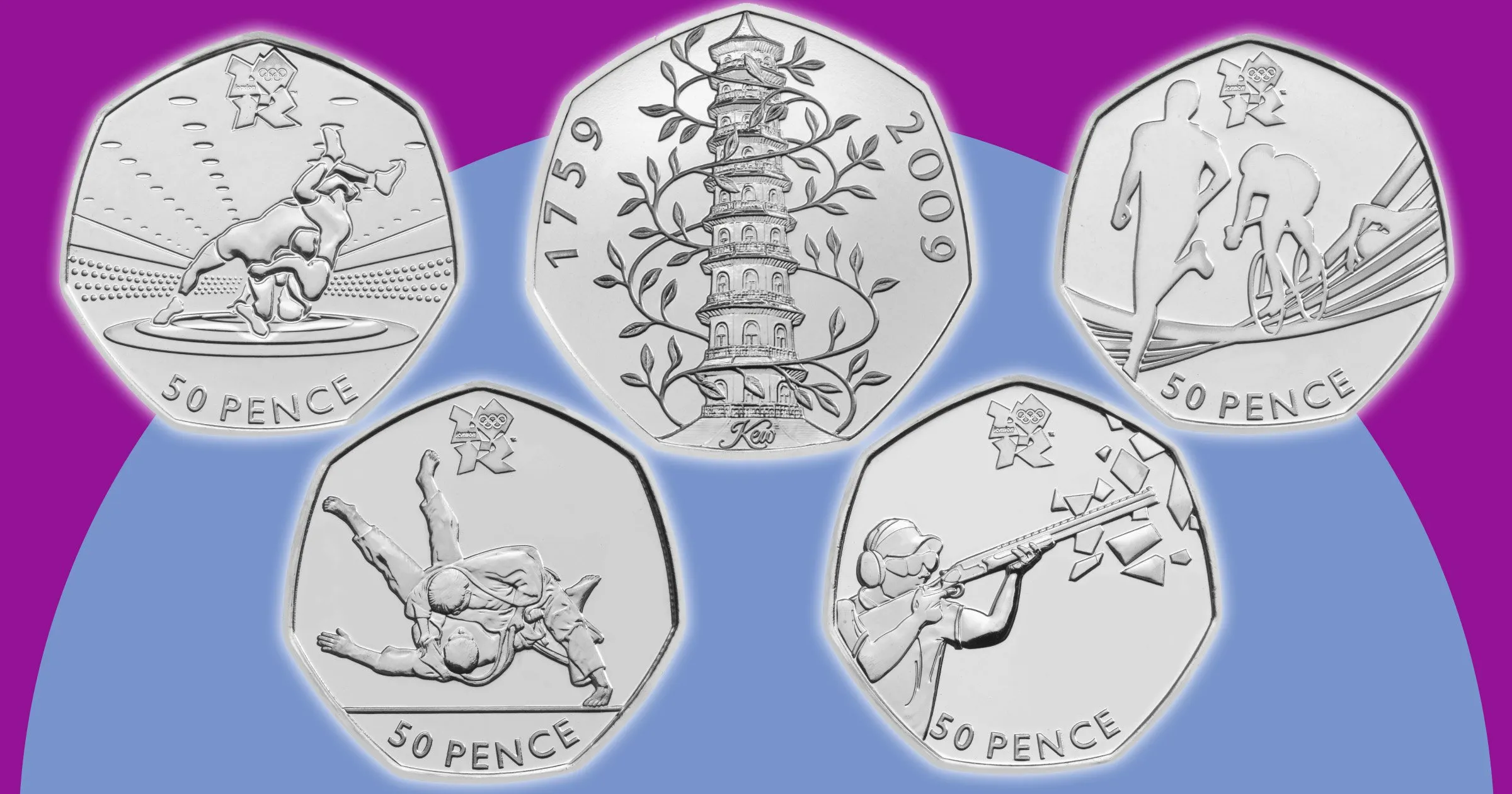
That ordinary 50p sitting in your wallet, kitchen drawer or car cup holder might deserve a second look before you spend it.
Britain’s 50p has become one of the country’s most popular coins to collect, with designs celebrating everything from the Olympic Games and children’s books to wildlife and famous landmarks.
Most are still worth exactly 50 pence.
But a tiny group are much harder to find.
And here’s the surprising part: the rarest circulating 50p isn’t necessarily the one collectors currently pay the most for.
So before you hand over your next 50p at the shop, turn it over.
You might recognize one of these.
The 50p Treasure Hunt Is Still Very Much Alive
The Royal Mint’s current list of the rarest 50p coins in active circulation contains just ten designs at the top.
Some had more than a million examples released.
The two rarest, however, had barely 200,000 each.
Considering how many millions of people have handled 50p pieces over the years, finding one of those coins unexpectedly in your change can feel like winning a miniature treasure hunt.
The Royal Mint currently identifies the 2023 Atlantic Salmon as Britain’s rarest circulating 50p, with only 200,000 released. It narrowly beat the legendary 2009 Kew Gardens 50p, of which 210,000 entered circulation.
But let’s start at number 10.
And if you have a jar full of old change nearby, now might be a good time to grab it.
10. Olympic Goalball 50p — 1,615,500 Minted
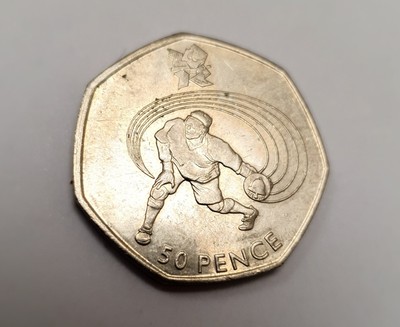
The first coin on the list comes from Britain’s famous London 2012 Olympic 50p collection.
Dated 2011, the Goalball coin was designed by Jonathan Wren and represents the Paralympic sport in which visually impaired players track a ball containing bells.
Only 1,615,500 entered circulation, placing it among the ten rarest circulating 50p designs according to The Royal Mint.
It isn’t going to pay off your mortgage. Current collector guides put ordinary circulated examples at only a few pounds or less.
But turning 50p into several times its face value isn’t bad for something you could receive as change.
9. Olympic Tennis 50p — 1,454,000 Minted
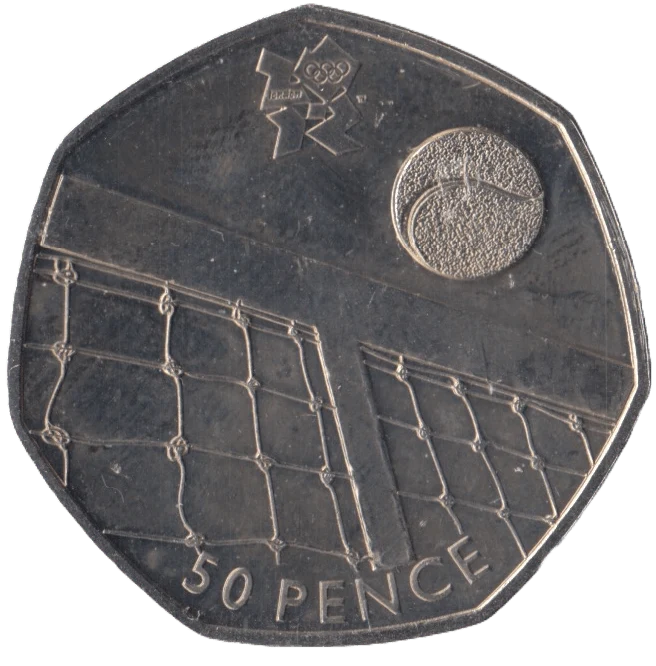
Next comes the 2011 Tennis 50p.
The design shows a tennis ball crossing a net, representing one of the sports featured in the London Olympic collection.
With 1,454,000 released into circulation, it is noticeably harder to find than many everyday commemorative 50p pieces.
Current collector guides place a normal circulated example at roughly a couple of pounds, although condition can affect what someone will actually pay.
And condition becomes increasingly important as we move further down this list.
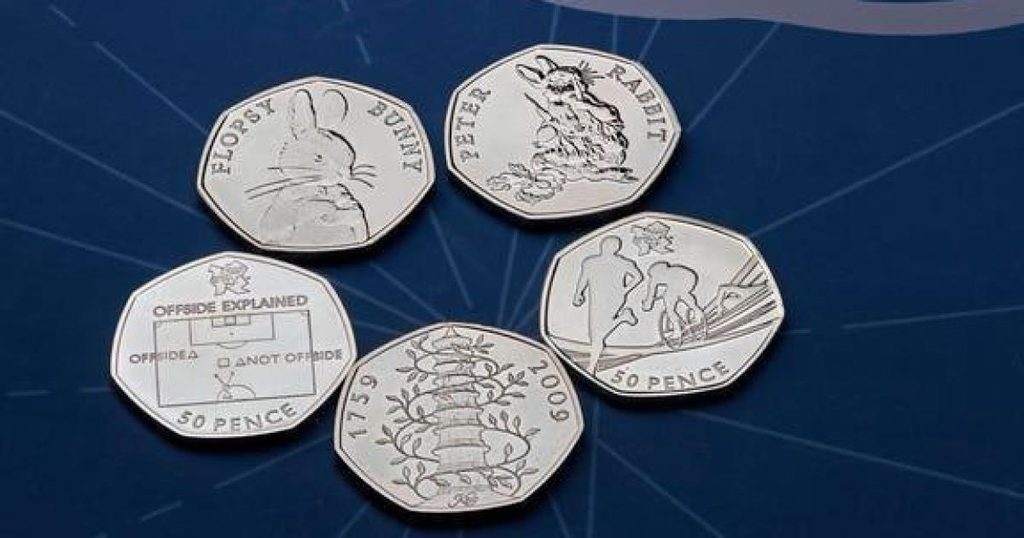
8. Flopsy Bunny 50p — 1,400,000 Minted
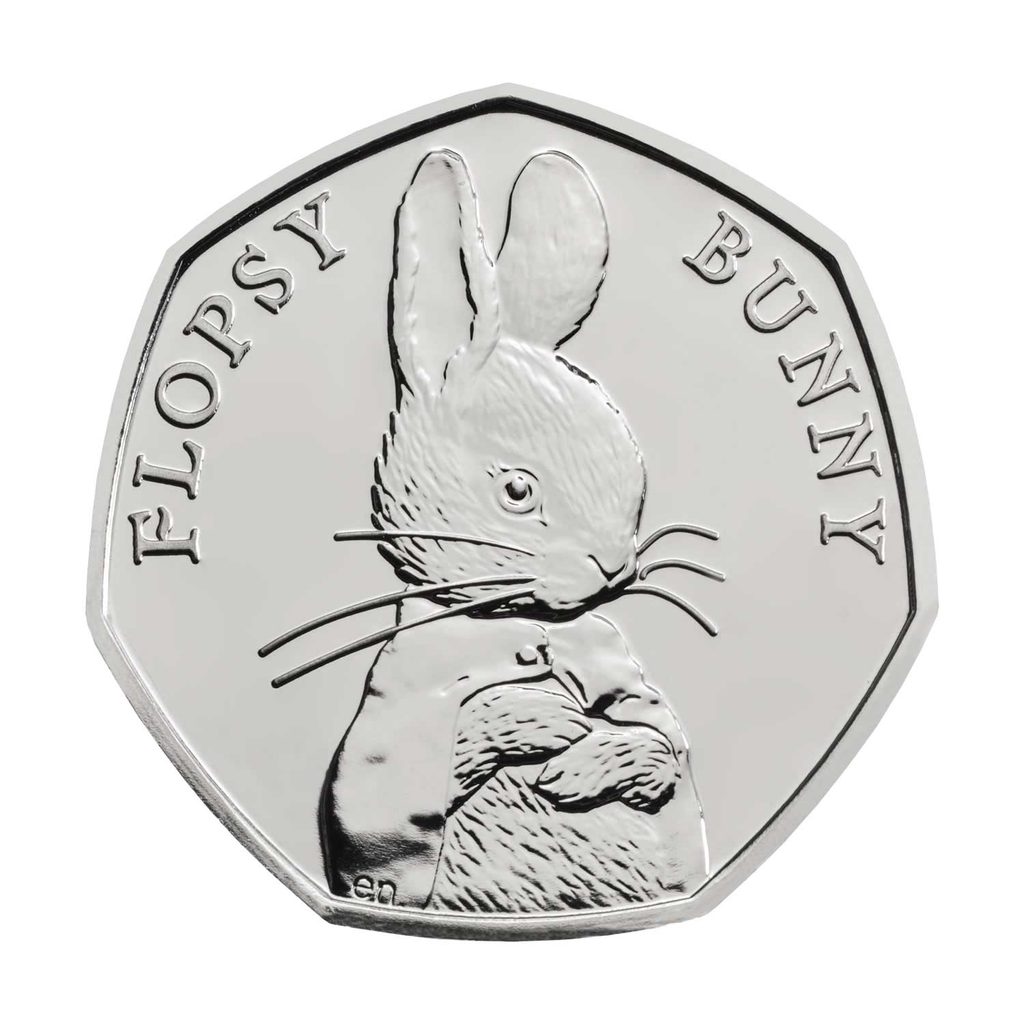
Now we leave the Olympic Games and enter the world of Beatrix Potter.
The 2018 Flopsy Bunny 50p immediately became a favorite with collectors because of its familiar character and relatively limited circulation.
Only 1.4 million were minted for circulation.
That may sound like a huge number until you compare it with the tens of millions struck for some other 50p designs.
Because character coins are also popular with casual collectors—not just serious numismatists—many examples may have been removed from day-to-day circulation and placed into collections.
Current collector guides value ordinary circulated examples at around a few pounds, depending on condition and demand.
So if Flopsy Bunny appears in your change, you may want to keep her out of the vending machine.
7. Peter Rabbit 50p — 1,400,000 Minted
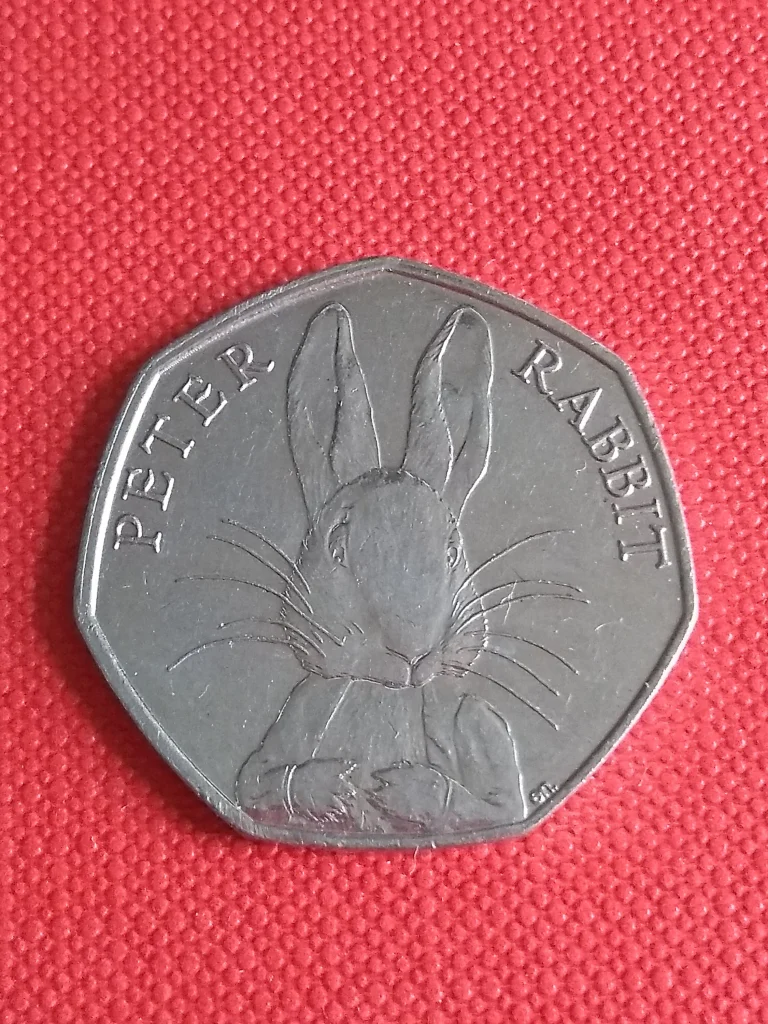
Flopsy isn’t alone.
The 2018 Peter Rabbit 50p had exactly the same circulation mintage: 1,400,000 coins.
Peter Rabbit had already appeared on earlier 50p designs, but the 2018 edition is the important one when discussing Britain’s ten rarest circulating 50ps.
Collectors love recognizable characters, and Peter Rabbit is arguably one of the most instantly recognizable designs ever placed on British change.
A circulated example is generally worth only several pounds according to current collector guides—not hundreds or thousands.
But that’s an important lesson for anyone getting interested in coins:
Rare doesn’t automatically mean incredibly expensive.
6. Olympic Triathlon 50p — 1,163,500 Minted
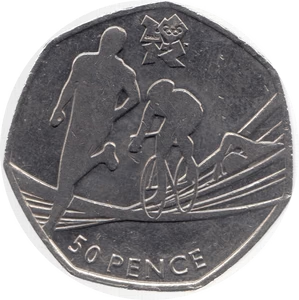
Now the numbers begin dropping quickly.
Only 1,163,500 Olympic Triathlon 50p coins entered circulation.
The coin features imagery representing swimming, cycling and running—the three disciplines that make up a triathlon.
And this is where values begin becoming more interesting.
Current 2026 collector guides suggest circulated Triathlon examples can trade around the high-single-digit-pound range, although actual selling prices vary considerably with condition and buyer demand.
Not life-changing money.
But definitely enough to make spending one for 50p feel like a mistake.
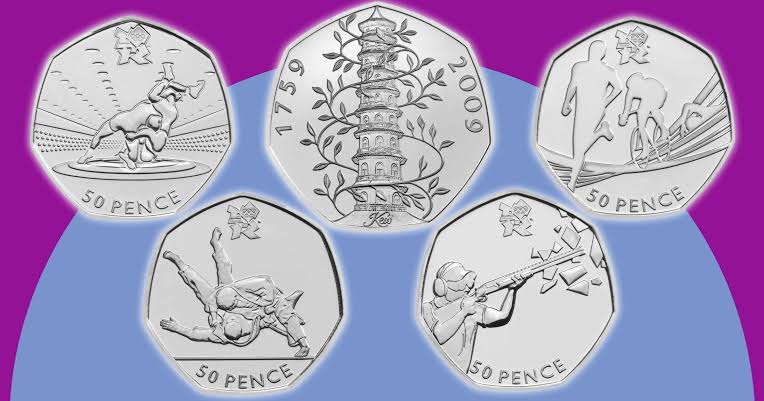
5. Olympic Judo 50p — 1,161,500 Minted
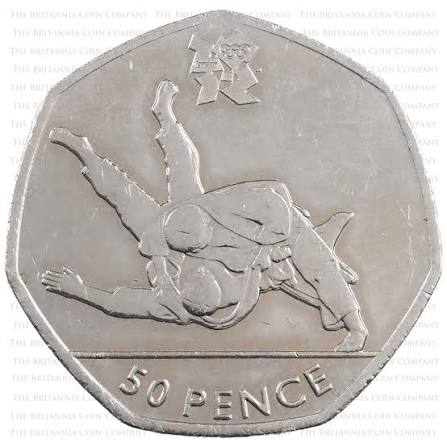
Just 2,000 fewer coins separate the Triathlon and Judo designs.
The Olympic Judo 50p had a circulation mintage of 1,161,500.
Its reverse depicts two judo athletes in action and has become one of the more desirable pieces from the huge Olympic collection.
Current collector guides can put circulated examples in roughly the £8 range, with better examples potentially attracting more interest.
If you’re searching through a pile of Olympic 50ps, this is one of the designs you definitely don’t want to overlook.
4. Olympic Wrestling 50p — 1,129,500 Minted
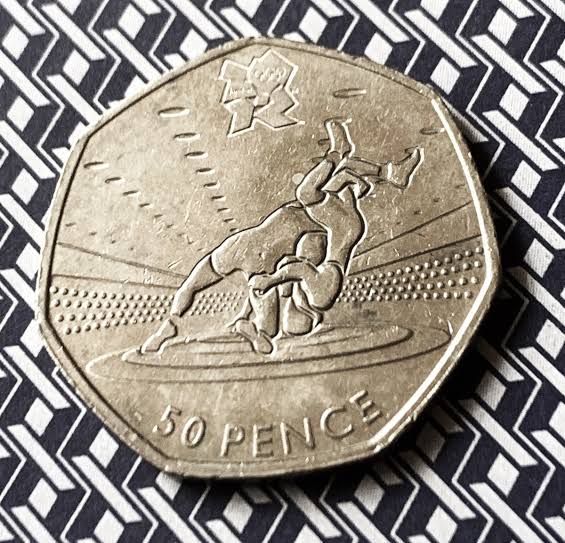
At number four comes Wrestling.
Only 1,129,500 examples entered circulation, according to the latest Royal Mint rarity ranking.
That puts it just slightly behind another Olympic coin that has developed something of a cult following.
And that coin has one of the strangest designs ever placed on a British 50p.
3. Olympic Football 50p — 1,125,500 Minted
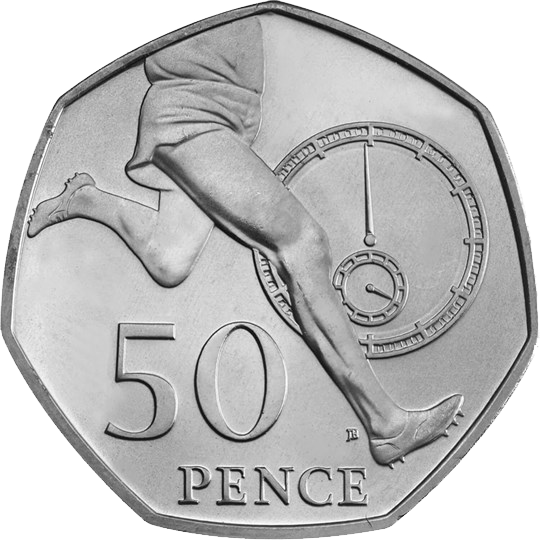
If you’ve never seen this coin before, you might initially wonder what you’re looking at.
Instead of simply showing a footballer kicking a ball, designer Neil Wolfson created a diagram explaining one of football’s most argued-about rules:
Offside.
The design resembles a tactical board, showing players and explaining when someone is considered onside or offside.
Only 1,125,500 entered circulation, making Football officially the rarest of the Olympic 50p designs in the current Royal Mint Top 10.
And collectors appear to care.
Current market guides put circulated examples at roughly £12 or more, depending on condition and current demand.
That’s around 24 times its face value.
But we’re about to make a gigantic jump.
Because numbers two and one aren’t merely scarce.
They’re in another league.
2. Kew Gardens 50p — Just 210,000 Minted
For years, this was the coin everyone hoped to discover in their change.
The 2009 Kew Gardens 50p commemorated the 250th anniversary of the Royal Botanic Gardens at Kew.
Christopher Le Brun’s design features the famous Chinese Pagoda surrounded by a decorative climbing vine.
It looks beautiful.
But the design isn’t the main reason collectors became obsessed with it.
Only 210,000 were released into circulation.
To put that into perspective, the Olympic Football coin directly below it on the rarity list had more than 1.1 million examples minted.
For roughly 15 years, Kew Gardens held the title of Britain’s rarest circulating 50p.
Then something happened.
A new King Charles III coin knocked it from the top spot.
Yet Kew Gardens remains extraordinarily desirable.
Current collector-market guides put a circulated 2009 Kew Gardens 50p at roughly £120, although the exact amount someone will pay varies with condition and the market.
Think about that for a moment.
50 pence becoming approximately £120.
That’s why collectors still check their change.
But Kew Gardens is no longer number one.
1. Atlantic Salmon 50p — Just 200,000 Minted
Meet Britain’s new rarity champion.
The 2023 Atlantic Salmon 50p, featuring King Charles III on the obverse, became part of the new definitive coin designs inspired by British flora and fauna.
The salmon design entered circulation in late 2023.
Then collectors got the number they had been waiting for.
Only 200,000 had been released.
That is 10,000 fewer than Kew Gardens.
In October 2024, The Royal Mint officially crowned the Atlantic Salmon the rarest 50p in active circulation. It still holds that position on The Royal Mint’s 2026 rarity list.
There is one extremely important detail, though.
Collectors looking for the rare circulating version should pay attention to the exact coin.
The sought-after circulation coin is the 2023 Atlantic Salmon without the crown privy mark. Versions produced for collector sets can look similar but are not the same scarce circulation issue.
Current collector guides estimate the circulating Atlantic Salmon at around £60, although secondary-market prices constantly move.
And that creates the biggest surprise on this entire list.
Wait — If the Salmon Is Rarer, Why Can Kew Gardens Be Worth More?
This is where coin collecting gets interesting.
Rarity and value aren’t the same thing.
Yes, only 200,000 Atlantic Salmon coins entered circulation compared with 210,000 Kew Gardens coins.
But price depends on more than mintage.
Collector demand matters.
History matters.
Condition matters.
How many collectors need a particular coin to complete their sets matters.
And Kew Gardens has spent more than a decade becoming one of Britain’s most famous modern collectible coins.
That helps explain why current market guides can value Kew Gardens significantly higher than the technically rarer Salmon. The Royal Mint itself warns collectors that low mintage can increase secondary-market value, but mintage alone doesn’t establish an exact selling price.
That’s an important distinction.
Don’t Believe Every “£10,000 50p” Headline You See
This may save you a lot of disappointment.
Someone can list a coin online for virtually any asking price they want.
A £5,000 listing does not prove somebody actually paid £5,000.
A £25,000 listing does not magically turn your Peter Rabbit coin into a £25,000 coin.
When trying to estimate value, look at completed or sold transactions, compare multiple similar examples and make sure you’re comparing the exact same year, design and version.
Condition also matters enormously.
A beautiful example with sharp detail can be more desirable than a heavily scratched coin of the same design.
And special proof, silver, gold or Brilliant Uncirculated collector versions should not be confused with ordinary circulating coins.
Whatever You Do, Don’t “Improve” Your Coin
Found something promising?
Your first instinct might be to make it shiny.
Don’t.
Scrubbing, polishing or chemically cleaning a collectible coin can alter its original surface.
Collectors generally prefer coins in their natural state.
If you’ve found something potentially valuable, handle it carefully—ideally by the edges—and keep it protected while you research exactly what you have.
The scratches and marks acquired through normal circulation are part of the coin.
Trying to turn an old coin into something that looks brand new can do more harm than good.
And What About Those Old Large 50p Coins?
Some readers may remember Britain’s original, larger 50p pieces.
There are genuinely scarce examples among those older coins, including the low-mintage 1992–93 EEC Presidency design.
But there’s an important distinction.
The large 50p was replaced by today’s smaller version in 1997, and the older coins were demonetised in 1998.
So they shouldn’t be mixed into a list claiming to show the ten rarest 50p coins currently in circulation.
They can still be collectible.
You just shouldn’t expect to receive one as legitimate 50p change at the supermarket today.
The 10 Coins to Remember
If you don’t want to memorize dozens of commemorative designs, remember these:
10. Goalball — 1,615,500
9. Tennis — 1,454,000
8. Flopsy Bunny — 1,400,000
7. Peter Rabbit — 1,400,000
6. Triathlon — 1,163,500
5. Judo — 1,161,500
4. Wrestling — 1,129,500
3. Football — 1,125,500
2. Kew Gardens — 210,000
1. Atlantic Salmon — 200,000
Those are the ten designs currently highlighted by The Royal Mint as Britain’s rarest circulating 50p coins.
So Is It Really Possible to Find One in Your Change?
Yes.
That’s what makes this hobby so addictive.
These weren’t created solely to sit behind glass in collectors’ cabinets.
The circulation versions were actually released through UK banks and post offices.
Many have since been pulled out of circulation by collectors, making an unexpected discovery increasingly exciting.
You could search hundreds of coins and find nothing remarkable.
Then one day, someone at a shop could hand you a 50p bearing a pagoda.
Or a salmon.
And suddenly you’ll be looking at that tiny seven-sided coin very differently.
So next time you’re handed change, don’t automatically drop it into your pocket.
Turn the 50p over first.
Because somewhere out there, some of Britain’s rarest circulating coins are still changing hands for exactly 50 pence.
Now check your change…
Have you ever found a Kew Gardens, Atlantic Salmon or rare Olympic 50p in your pocket?
And if you found one worth £50 or £100, would you sell it — or keep it for years hoping the value rises?
Tell us which rare 50p you have in the comments.