I still remember exactly where I was standing when it happened.
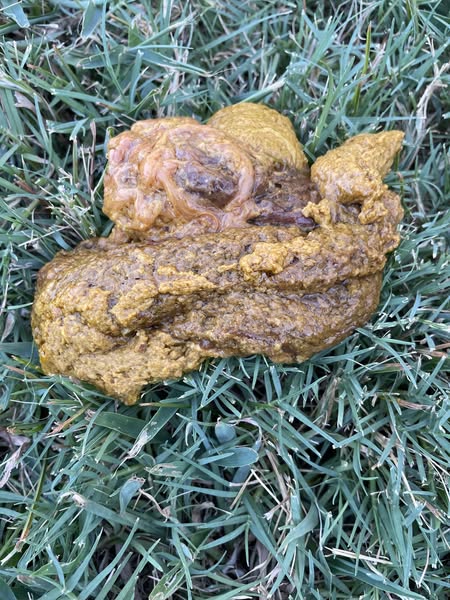
It was a cold January morning, and I was outside cleaning up after Rusty before work. He had been on the new drops I was trying for exactly two weeks.
I wasn’t expecting anything dramatic.
Honestly, after everything we’d already tried, I wasn’t expecting much of anything.
Then I looked down.
And I froze.
There was mucus in his stool and strange rope-like material that looked nothing like what I was used to seeing.
I remember putting the bag down, staring at it for a few seconds and then sitting right there on the edge of the patio.
And I cried.
Not because I suddenly knew exactly what it was.
I didn’t.
I cried because for almost two years I had been watching this dog suffer, and for the first time in a very long time, something about him seemed to be changing.
My name is Amanda, and Rusty is the kind of dog people fall in love with within five minutes.
He’s goofy. Too affectionate. Completely convinced every person who walks through the door came specifically to see him.
But for almost two years, that wasn’t the Rusty I was living with.
It Started With Scratching
At first, I barely worried about it.
Dogs scratch.

Rusty had been a rescue, and about eight months after I adopted him, I noticed he was licking his front paws more than usual.
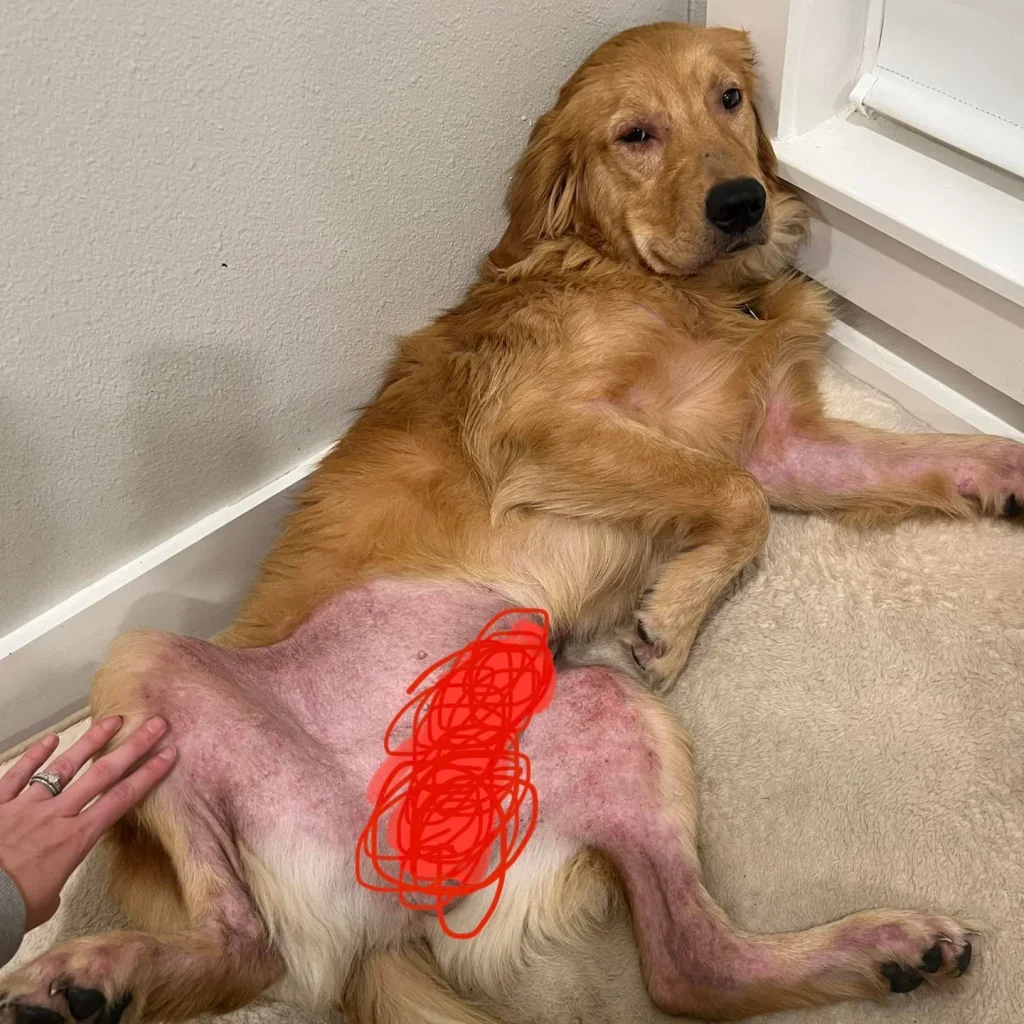
Then he started scratching his belly.
Then the base of his tail.
Within a few months, the paw licking had become so constant that the fur around his feet was stained dark brown.
And nighttime was the worst.
Almost every night, somewhere around 2 AM, I would hear him get up.
Click.
Click.
Click.
His nails across the bedroom floor.
He’d pace for a while, stop, lick his paws, scratch, lie down and then get back up again.
Some nights I would wake up and find him sitting beside the bed just looking at me.
Exhausted.
I was exhausted too.
My veterinarian initially suspected environmental allergies.
That made sense.
We tried the things I was told could help.
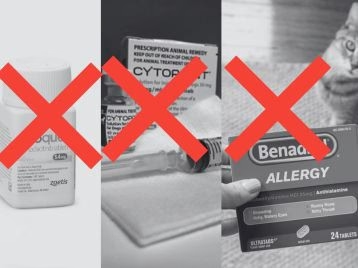
Medication.
Injections.
Different foods.
Special shampoo.
A hydrolyzed diet that cost more than some of my own grocery trips.
I even paid for allergy testing because I was desperate to have an answer.
Chicken.
Beef.
Eggs.
Grass.
A list of things suddenly became suspects.
So I changed his food.
Changed treats.
Washed blankets constantly.
Wiped his paws after walks.
I did everything.
For a little while, certain treatments seemed to help.
Then the scratching came back.
“Lifetime Management”
Eventually, the phrase I kept hearing was:
“Chronic atopic dermatitis.”
And then came the part that crushed me.
“It’s probably something you’ll manage for the rest of his life.”
Rusty was only four.
The idea that this young, happy dog might spend the next decade cycling through itching, medication and flare-ups was difficult to accept.
But I wasn’t against veterinary medicine.
Quite the opposite.
I followed everything I was told to do.
By that point, I’d spent well over a thousand dollars trying to figure out why my dog couldn’t get comfortable.
And still, at 2 AM, I heard those nails crossing the bedroom floor.
One night I called my sister and completely lost it.
“I don’t know what else to do,” I told her.
“He’s miserable. I’m doing everything they’re telling me to do and he’s still chewing himself.”
That was the night I stopped looking for another shampoo.
And started trying to understand what else might be affecting him.
I Went Down a Very Deep Rabbit Hole
I’m a nurse, which is both helpful and dangerous when you get obsessed with researching something.
I started reading about canine skin health.
Then gut health.
Then parasites.
Then the microbiome.
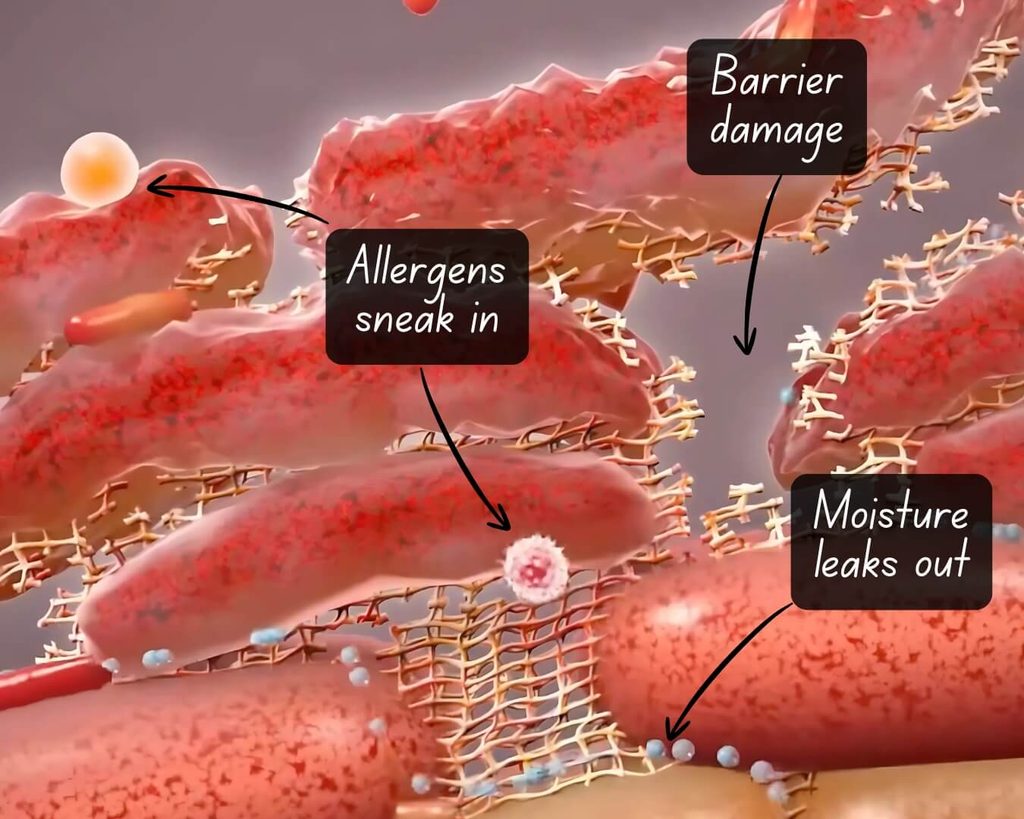
Then how intestinal problems can sometimes influence inflammation and immune responses elsewhere in the body.
I stayed up far too late reading veterinary papers, pet-health forums and stories from other dog owners.
Some of the things people claimed online were obviously exaggerated.
Apparently every symptom a dog could possibly have was blamed on parasites somewhere on the internet.
I wasn’t ready to believe that.
But one thing did make me stop.
Rusty hadn’t had a broad parasite-focused routine in quite a while.
And although routine fecal testing is useful, it doesn’t detect every infection every single time. Parasites can shed eggs intermittently, which is one reason veterinarians may sometimes recommend repeat testing or other diagnostic methods when symptoms and exposure history justify it.
That was the first time I wondered:
What if I was so focused on his skin that I wasn’t looking at the whole dog?
That’s When I Found Pawsy
By this point I had become incredibly skeptical of pet supplements.
If an ad said “miracle,” I usually closed the tab.
I’d wasted enough money.
But Pawsy kept appearing in discussions I was reading.
It was a liquid botanical formula marketed as a parasite-support cleanse for dogs.
The formula included ingredients such as black walnut, wormwood, Oregon grape root, pumpkin seed and other botanicals commonly discussed in traditional herbal preparations.
What I liked most wasn’t some dramatic promise.
It was how easy it looked to use.
A few drops with food.
That was it.
No pill wrestling.
No powder Rusty would somehow detect no matter how cleverly I hid it.
Still, I almost didn’t buy it.
I remember staring at the checkout page thinking:
Amanda, how many “one more things” are you going to try?
But anyone who has watched their dog suffer knows what happens next.
You try one more thing.
The First Few Days Were… Uneventful
I added the drops to Rusty’s food.
He ate.
Nothing happened.
Day two.
Same thing.
Day three, I noticed his bowel movements were a little different, but nothing that made me think we’d suddenly discovered some great answer.
And honestly?
That reassured me.
I wasn’t looking for some overnight miracle anymore.
I’d had enough of those promises.
Then something happened around the end of the first week.
Rusty slept.
All night.
I woke up before my alarm and immediately realized something felt strange.
The room had been quiet.
No pacing.
No licking.
No nails tapping across the floor at 2 AM.
I actually checked his bed.
He was curled up asleep.
I can’t explain how emotional that tiny moment felt.
One uninterrupted night may sound insignificant.
When you haven’t had one in a year, it feels enormous.
Then Came That Morning in the Backyard
About two weeks after starting the routine, I saw the strange material in Rusty’s stool.
My first reaction was to think of all the dramatic “parasite cleanse” photos I’d seen online.
But I also knew enough not to diagnose something by looking at it.
Mucus, plant material, intestinal contents and other things can look incredibly strange once they’ve passed through a dog’s digestive system.
So no — I can’t tell you that what I saw was definitively a worm or “biofilm.”
What I can tell you is what happened around the same period.
Rusty was sleeping better.
He wasn’t spending the entire evening attacking his paws.
His stomach seemed more settled.
And little by little, I was spending less time saying:
“Rusty, stop licking.”
“Rusty, leave it.”
“Rusty…”
For two years those words had been background noise in our house.
Then suddenly I noticed I wasn’t saying them as often.
By the Third Week, I Started Taking Pictures
Not because I planned to show anyone.
I needed to know whether I was imagining things.
I photographed his paws.
His belly.
The area around his tail.
I compared them with old pictures.
The difference wasn’t some overnight before-and-after transformation.
But he looked calmer.
His paws didn’t look as angry.
His coat looked better.
Most importantly, Rusty wasn’t behaving like a dog who was constantly uncomfortable.
That mattered more to me than anything.
I Didn’t Stop Listening to My Vet
This part is important.
I see pet ads online telling people that vets are deliberately hiding natural cures because they make money from medications.
I don’t buy that.
Rusty’s veterinarian helped us through some awful months.
The medications we used were legitimate treatments for allergic itch, and dogs with true atopic dermatitis may genuinely benefit from them.
A supplement doesn’t magically prove that the original diagnosis was wrong.
Dogs can itch for dozens of reasons.
Fleas.
Food allergies.
Environmental allergies.
Mites.
Bacterial infections.
Yeast.
Parasites.
Hormonal problems.
Sometimes more than one thing is happening at the same time.
What changed for me was realizing that I didn’t have to think about Rusty’s health as skin OR gut OR parasites OR allergies.
I could look at the whole picture.
The Dog I Started Seeing Again
A month into the new routine, something happened that mattered more than any photograph.
Friends came over.
Normally Rusty would greet them, become restless and spend half the evening licking himself while everyone tried not to notice.
That night he eventually climbed onto the rug, stretched out and fell asleep.
My friend looked down at him and said:
“Rusty seems different.”
I knew exactly what she meant.
He seemed comfortable.
I had almost forgotten what that looked like.
His coat was shinier.
His paws weren’t constantly wet from licking.
He was sleeping through most nights.
And I wasn’t watching him every ten minutes wondering what was hurting.
For the first time in a long time, I felt like I had my dog back.
Then Everyone Started Asking What I Was Doing
My sister was the first person I told.
Her beagle also struggled with chronic itching, so naturally she wanted to know every detail.
Then a neighbor asked.
Then somebody at work.
And that’s when I realized how many dog owners were quietly dealing with the same exhausting cycle.
The scratching.
The paw licking.
The scooting.
The stomach issues.
The expensive food changes.
The late-night Googling.
The feeling that you’ve tried everything and somehow still haven’t figured out why your dog isn’t comfortable.
But I also learned something important from talking to them:
Not every itchy dog has the same problem.
And that’s exactly why I wouldn’t tell someone:
“Your dog definitely has parasites.”
I can’t know that.
Neither can a Facebook ad.
What I Would Tell Another Dog Owner Now
If your dog suddenly starts scratching constantly, don’t immediately assume there’s one hidden cause.
Get them checked.
Rule out fleas.
Talk about mites.
Discuss food and environmental allergies.
Ask whether skin infection could be contributing.
And talk to your veterinarian about an appropriate parasite-prevention and testing schedule for your dog’s lifestyle and location.
But I would also tell you not to ignore digestive health just because the most visible symptom happens to be on the skin.
That was the mistake I made.
I spent almost two years looking only at what Rusty was doing on the outside.
The licking.
The scratching.
The redness.
I rarely stopped to think about everything happening inside him at the same time.
Why I Kept Using Pawsy
For me, the biggest reason was simple.
Rusty tolerated it.
It was easy to add to his routine.
And during the period I used it, I saw changes in his comfort and behavior that made me want to continue.
That’s my experience.
It isn’t proof that the same thing will happen for every dog.
And I wouldn’t replace prescribed parasite prevention or veterinary treatment with an herbal supplement without discussing it with a veterinarian first.
Some herbal ingredients can interact with medications or be inappropriate for certain dogs, especially at concentrated doses.
“Natural” doesn’t automatically mean harmless.
I wish someone had told me that earlier too.
Eight Months Later
Rusty still scratches occasionally.
He’s a dog.
He rolls in grass.
He gets dirty.
His skin isn’t magically immune to irritation.
But our life doesn’t revolve around his itching anymore.
He sleeps.
I sleep.
He plays.
He comes inside after a walk and doesn’t immediately spend twenty minutes chewing his feet.
Sometimes I look at him asleep on the couch and remember the dog who used to pace beside my bed at 2 AM.
That’s when I realize how much both of us had been struggling.
The Biggest Lesson Rusty Taught Me
For two years, I wanted one simple answer.
Allergies.
Parasites.
Food.
Something.
Anything I could point to and say:
“That’s it. Fix that and he’s cured.”
Real health usually isn’t that simple.
What finally helped me was becoming curious again.
Not rejecting veterinary care.
Not believing every dramatic claim online.
Just asking better questions and paying attention to Rusty as a whole dog instead of one symptom at a time.
Pawsy became part of that journey for us.
And I’m glad I tried it.
But the real breakthrough wasn’t finding a bottle of drops.
It was refusing to accept that constant discomfort was simply something Rusty and I had to stop questioning.
If you’re awake tonight listening to your dog scratch, lick or pace across the floor, I know exactly how helpless that feels.
I’ve been there.
Take the symptoms seriously.
Get the right veterinary guidance.
Ask questions.
Keep notes.
Look at the whole picture.
And whatever you decide to try next, pay attention to the dog in front of you rather than the miracle promised on a screen.
Because when Rusty finally started sleeping through the night again, I realized something:
I hadn’t just missed having a healthy-looking dog.
I’d missed having my Rusty back.
— Amanda
This first-person advertorial is for general informational purposes. Chronic itching, scooting, gastrointestinal symptoms or behavioral changes can have many causes and should be evaluated by a veterinarian. Supplements should not replace veterinarian-recommended parasite prevention, diagnosis or treatment.