Women With Varicose Veins Are Talking About This Herbal Balm — But There’s More to the Story Than the Viral Claims
For many women, the first varicose vein doesn’t seem like a medical problem.
It may be a small blue line behind the knee. A slightly raised vein on the calf. Something you notice in the mirror but assume you can deal with later.
Then it becomes more visible.
Your legs begin feeling heavier after a long day. Maybe your ankles look a little more swollen at night. And suddenly that vein you once considered cosmetic becomes something you check almost every morning.
That’s exactly why one story circulating online has caught so much attention.
It describes a young woman who reportedly returned for a follow-up ultrasound expecting to discuss treatment — only to be told that her vein looked better than before.
And the thing she credited wasn’t surgery.
It wasn’t an injection.
It was a small jar of herbal balm.
That sounds almost too simple.
So what’s actually going on?
Why Varicose Veins Appear in the First Place
To understand why this story is getting attention, you first have to understand what a varicose vein actually is.
The veins in your legs have a difficult job.
They have to move blood upward toward your heart while working against gravity.
Tiny valves inside those veins help keep blood moving in the right direction. When those valves become weakened or don’t close properly, blood can pool inside the vein.
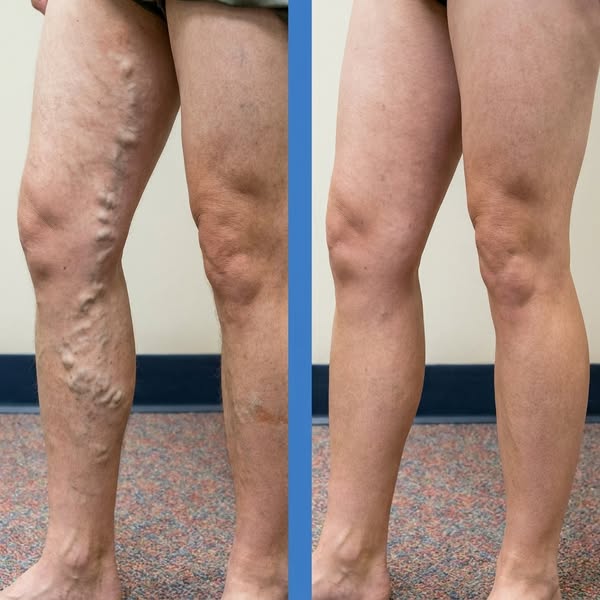
Over time, that pressure can make the vein larger, twisted and much more visible beneath the skin.
That’s why varicose veins are more than simply “bad-looking veins.”
Some people never experience significant symptoms.
Others develop aching, heaviness, throbbing, burning or swelling in the lower legs.
And once you begin noticing those symptoms, it’s easy to become hyper-aware of every change.
The Treatment Conversation Can Be Surprisingly Complicated
There isn’t one treatment that fits everyone.
For milder symptoms, doctors may initially recommend movement, avoiding long periods of sitting or standing, elevating the legs and sometimes wearing compression stockings.
Compression can help blood move through the legs more effectively and may reduce symptoms.
But when varicose veins become more troublesome, there are also medical procedures available.
One of the best-known is sclerotherapy.
A healthcare professional injects a solution into the affected vein, causing it to scar and close. Blood then reroutes through healthier veins and the treated vein gradually fades.
There are also laser treatments, catheter-based ablation procedures and other options depending on the size and location of the veins.
So why would someone hesitate?
Because individual medical history matters.
And that’s where the viral story becomes more interesting.
The Woman in the Story Had Factor V Leiden
According to the account circulating online, the young woman had Factor V Leiden, an inherited condition associated with an increased tendency for blood clots.
That detail matters.
Hypercoagulable conditions can affect how doctors evaluate the risks and benefits of procedures involving veins.
But it doesn’t automatically mean every person with Factor V Leiden can never undergo sclerotherapy.
An international consensus document lists hypercoagulable states associated with venous-thromboembolism risk as a relative, rather than universal absolute, contraindication. The treatment decision depends on the individual patient and whether risks can be appropriately managed.
That distinction is important.
Medicine is rarely as simple as “this procedure is dangerous for everyone with this condition.”
Still, you can understand why a young woman who already worries about clotting might be particularly interested in conservative options.
And according to the viral story, that’s exactly what happened.
Then Came the Follow-Up Scan
The story claims that when the woman returned months later, her clinician compared her new ultrasound with the original.
The vein reportedly looked less prominent.
The account goes even further, claiming measurements related to venous reflux had improved.
That’s the moment designed to make almost anyone with visible veins stop scrolling.
Because if you’ve been told that damaged veins usually require compression, injections or procedures, the idea that an ordinary topical balm could actually change an ultrasound sounds extraordinary.
But extraordinary claims require a closer look.
And this is where the distinction between a compelling testimonial and established evidence becomes extremely important.
What Was She Using?
The product at the center of the story is called Senzio Miracle Balm.
Senzio’s current formula includes ingredients such as comfrey, Angelica sinensis, Angelica dahurica, frankincense, myrrh, sesame oil, peppermint oil, beeswax and Feng Huang, which the company identifies as black tea.
At first glance, that ingredient list explains some of the product’s appeal.
Peppermint can create an immediate cooling sensation.
A balm also gives users something many people find naturally soothing after standing all day: several minutes of massage directly over tired calves and ankles.
And because the product remains on the skin, it can provide a longer-lasting moisturizing and soothing experience than a lotion that disappears quickly.
But there’s a major difference between making your legs feel better and physically reversing venous disease.
This Is Where Online Stories Can Get Ahead of the Evidence
Some advertisements describe varicose veins as if one specific inflammatory pathway is secretly creating the entire problem and certain herbs can simply switch that pathway off.
The real biology is more complicated.
Inflammation can be involved in chronic venous disease, but varicose veins are fundamentally associated with venous valve dysfunction, increased pressure and abnormal blood flow.
And there currently isn’t good clinical evidence showing that rubbing an herbal balm onto the skin can reliably repair malfunctioning venous valves or reverse significant venous reflux.
In fact, Senzio’s own current informational page uses much more conservative language.
The company describes the balm as something intended to provide temporary topical comfort for tired, heavy legs and areas affected by visible-vein discomfort.
It also explicitly states that the product does not remove varicose veins or treat the underlying venous condition.
That may sound less dramatic than the viral story.
But it’s a much more useful expectation to have.
So Does That Mean the Balm Is Pointless?
Not necessarily.
And this is where the conversation becomes more nuanced.
Someone whose legs feel tired after standing all day may genuinely enjoy massaging a cooling balm into them.
Peppermint can provide a refreshing sensation.
Massage itself can feel soothing.
A thick botanical balm can moisturize dry skin and make a nightly leg-care routine more pleasant.
If that makes someone more comfortable, that benefit doesn’t suddenly become meaningless just because the product isn’t rebuilding veins.
The problem begins when comfort claims become cure claims.
Those are two completely different things.
There’s Another Reason the Story Resonates With Women
Varicose veins are incredibly visible.
That makes them emotionally different from many other conditions.
You see them when you get dressed.
You see them in photographs.
You notice them when you wear shorts.
You might unconsciously cross one leg over the other when somebody is looking.
And once you’ve become concerned about a vein, it’s very easy to start checking it constantly.
Is it bigger today?
Was that smaller vein there last month?
Why does my calf feel heavy tonight?
Is that swelling?
That constant monitoring can make an otherwise manageable problem feel like it’s controlling far more of your life than it should.
So when somebody online says they found something simple they could apply for a few minutes before bed, it makes sense that people pay attention.
But What About Compression Stockings?
Compression gets a bad reputation in some viral advertisements.
That isn’t really fair.
Compression stockings apply pressure to the legs, helping veins and leg muscles move blood more effectively.
For some people, they can reduce aching, swelling and that familiar heavy-leg feeling.
They aren’t magic.
And they don’t suit everybody.
But major clinical guidelines still include compression as a legitimate conservative option for symptomatic chronic venous disease.
The same goes for exercise.
Walking won’t magically erase every bulging vein, but movement activates the calf muscles that help move blood upward through the legs.
That’s one reason staying physically active remains useful.
And Sclerotherapy Isn’t Simply a “Temporary Fix”
This is another point worth clearing up.
You may hear people say that veins removed with sclerotherapy simply “come right back.”
That isn’t quite accurate.
Mayo Clinic notes that treated veins that disappear generally do not return.
However, new varicose veins can develop later.
That difference matters.
Closing an abnormal vein does not make someone permanently immune to developing another abnormal vein somewhere else.
But that doesn’t mean the original treatment did nothing.
For appropriate patients, sclerotherapy and other procedures can be effective options.
What If You’re Young and Already Seeing Varicose Veins?
This may be the audience most likely to identify with the viral story.
You might be 25 or 35 and think:
“Why is this already happening to me?”
Age is only one factor.
Family history can matter.
Pregnancy can matter.
Hormonal changes can matter.
Body weight, prolonged standing and other factors can contribute.
Some people simply develop visible veins much earlier than others.
That can be frustrating, but seeing a varicose vein at a young age doesn’t automatically mean you’re headed toward severe disease.
What matters more is what the vein is actually doing.
Are you having pain?
Persistent swelling?
Skin changes?
Bleeding?
A feeling of heaviness?
Are the veins rapidly becoming more prominent?
Those questions are far more useful than simply counting blue lines in the mirror.
When You Should Stop Experimenting and Get Checked
A cosmetic-looking vein is one thing.
Sudden swelling or pain is another.
If one leg suddenly becomes significantly swollen, painful, warm or red, seek medical assessment rather than assuming it’s “just your varicose veins.”
Those symptoms can sometimes occur with blood clots or other problems that need prompt attention.
Persistent skin changes around the ankles also deserve medical evaluation.
And if your veins are causing enough discomfort that you’re planning your clothing, exercise or daily routine around them, it may be worth having a proper venous assessment.
Doctors can use Doppler ultrasound to see how blood is actually moving through the veins.
That’s much more informative than judging severity from appearance alone.
The Real Appeal of a Nightly Balm May Be Simpler Than the Advertisement Suggests
Maybe the biggest mistake is expecting one product to solve every part of the problem.
A balm doesn’t need to rebuild a vein to have a place in somebody’s routine.
Someone might wear compression during a long workday.
Walk regularly.
Elevate their legs when resting.
Maintain a healthy weight.
Discuss troublesome veins with a healthcare professional.
And still enjoy massaging a cooling botanical balm into tired legs before bed.
Those things don’t have to compete with one another.
The smartest approach is often the one that separates symptom comfort from medical treatment.
So What Should You Believe About the Viral Story?
Treat it as a story.
Not as proof.
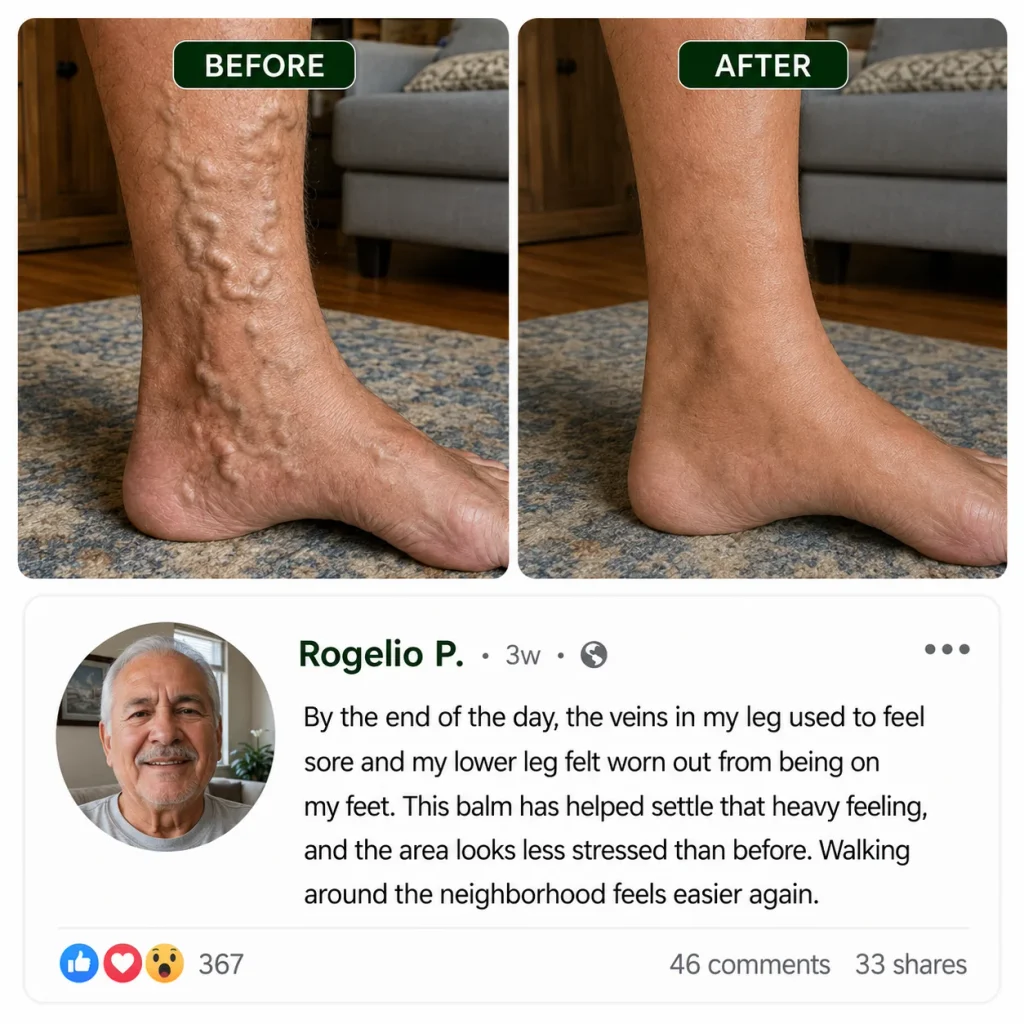
The account of a young woman whose ultrasound supposedly improved after months of using Senzio is certainly intriguing.
But one dramatic testimonial cannot establish that a balm reverses venous reflux.
And there’s another important clue consumers should notice:
Senzio itself currently stops short of making that claim on its more conservative product information.
The brand says the balm is for topical comfort and does not claim that it removes varicose veins or treats the underlying venous disease.
That doesn’t make the product automatically good or bad.
It simply tells you what kind of expectation is reasonable.
The Bottom Line
Varicose veins happen when blood does not move through superficial leg veins as effectively as it should, often because vein valves are weakened or incompetent.
For many people, conservative measures such as movement, leg elevation and compression can help manage symptoms.
For others, treatments including sclerotherapy, laser procedures or ablation may be appropriate.
And products such as Senzio Miracle Balm may offer something much simpler:
A cooling, soothing topical routine for tired or heavy-feeling legs.
That may be useful.
It just isn’t the same thing as medically reversing a damaged vein.
So if you decide to try a balm because you enjoy how it makes your legs feel, that’s one thing.
But if someone tells you a jar of herbs can replace an ultrasound, repair failing vein valves or eliminate the need for medical treatment…
that’s when it’s worth asking for evidence.
Because sometimes the most important part of a viral health story isn’t what happened in the first paragraph.
It’s what you discover when you keep reading.
Have you ever noticed visible veins appearing on your legs earlier than you expected? You’d be surprised how many people quietly deal with the same thing.
This article is for general informational purposes only and does not replace personalized medical advice, diagnosis or treatment.