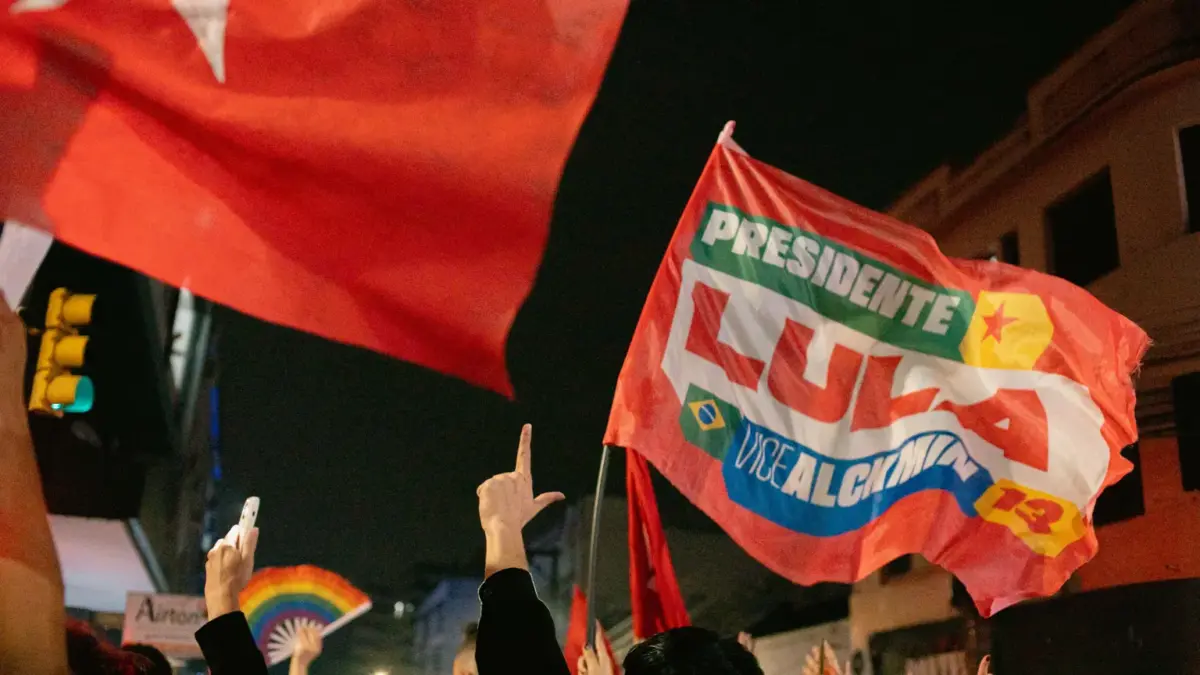
Brazil election, USA News (London): Brazilian President Luiz Inacio Lula da Silva has won a historic fourth term, the country’s electoral court said, in a shock result that defied polls, precedent and global anti-incumbent sentiment to put the brakes on a wave of right-wing election victories across Latin America.
However, his opponent Senator Flavio Bolsonaro, the eldest son of former President Jair Bolsonaro, refused to accept defeat and said he would ask for the result to be annulled due to a Sunday ruling from a Supreme Court justice that extended voting for two hours. The result will be a disappointment to the White House, as Lula is a prominent Trump critic who insisted that Brazil would “never fit into anyone’s backyard”. Bolsonaro led the election’s first round but lost in the runoff by over 4 million votes, rattling Brazilian financial markets which had bet on his victory.
His refusal to concede defeat has echoes of his father’s reaction after losing to Lula in 2022. Jair Bolsonaro never accepted his loss and was later sentenced by the Supreme Court to 27-years in prison for plotting a coup to remain in power. The scale of Flavio Bolsonaro’s loss to Lula — by more than twice his father’s losing margin — and the fact his campaign also asked for an extension due to rains in the conservative-leaning south make any annulment unlikely, analysts said. Mario Braga, a Latin America analyst at the risk consultancy RANE, said there could be right-wing protests in coming days, but “it’s very improbable that it will lead to the reversal of the result.”
Market Reaction and Political Comeback
Investors expect recent bets on a change of government to unwind in a volatile week ahead on financial markets. A Tokyo-listed exchange-traded fund tracking Brazil’s Bovespa index dived nearly 15% in Asia trade on news of Lula’s victory, while the Brazilian real was set to fall sharply against the US dollar.
The victory marks another comeback in a career full of them for Lula, an icon of the global left and the most dominant force in Brazilian politics this century. The 80-year-old was jailed from 2018 to 2019 on corruption charges that were later overturned, paving the way for him to beat Jair Bolsonaro in the 2022 election. “He is a statesman, a giant,” leftist federal lawmaker Erika Hilton, who was with Lula in Sao Paulo during the vote count, told Reuters.
At times, Lula’s reelection looked like a long shot, as voters soured on him and his Workers’ Party after years of corruption scandals and rising prices, while sweeping social changes left the former metalworker and union leader looking out of touch with an increasingly app-based economy and its growing ranks of informal workers. Pollsters said better-than-expected turnout had powered Lula to victory. Leonardo Barreto, the co-founder of consultancy Think Policy, said voters had chosen Lula’s familiar embrace over Bolsonaro’s novelty.
Challenges Ahead in a Conservative Congress
Still, Lula’s fourth term could be his most difficult yet, after Brazil elected its most conservative Congress since returning to democracy in the 1980s. Combined, Bolsonaro’s Liberal Party and allied parties could control over 280 seats in the lower house and up to 50 seats in the Senate, enough for comfortable opposition majorities in both chambers.
Lula faces an economy that his government forecasts will grow just 2.3% next year, adding to fiscal concerns tied to high interest rates and public debt that has risen past 82% of GDP, the highest since the pandemic. Goldman Sachs said it expects Lula to make modest progress at most to contain spending in a fourth term, as he stays committed to a state-led growth model.