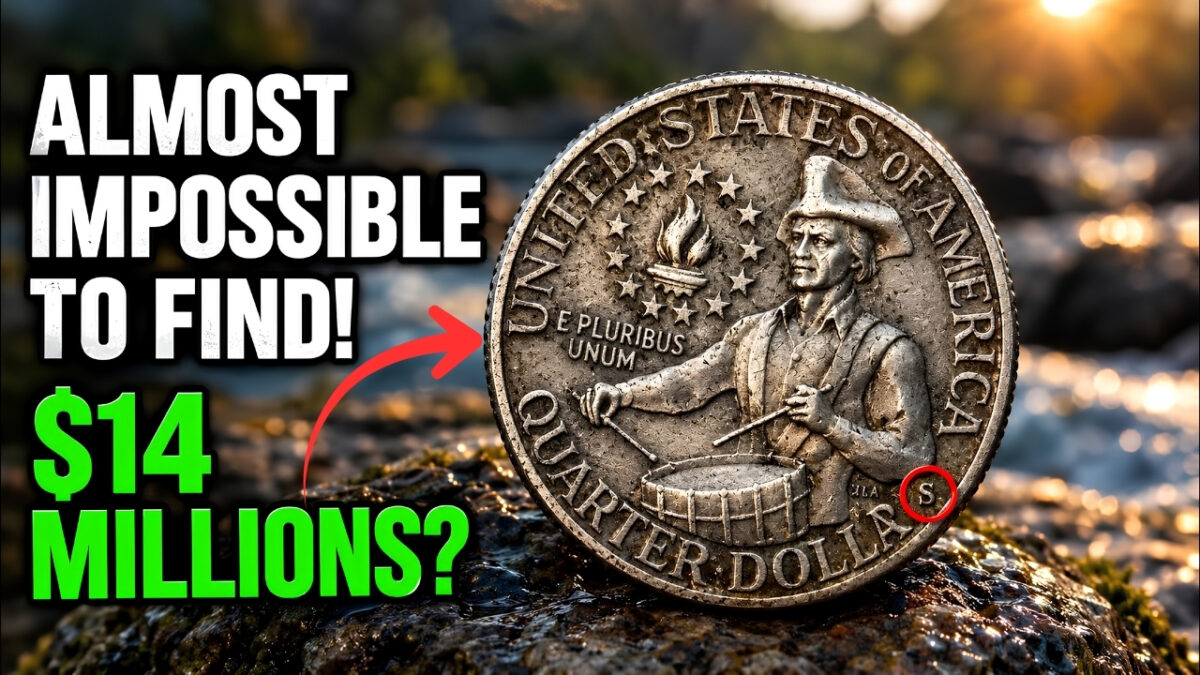
6 Rare Bicentennial Quarter Coins : For many families, these coins became keepsakes rather than spending money. Today, sensational online headlines have renewed interest, suggesting that ordinary examples could represent extraordinary discoveries.
The reality is more interesting, and more useful, than those claims suggest. Certain examples deserve careful examination, but age and a commemorative design alone do not make a quarter rare.
What the Sensational Headlines Leave Out
Claims that Bicentennial quarters have achieved enormous, multimillion-dollar valuations should not be treated as established news. GreatCollections has specifically challenged extravagant stories about these coins.
Meanwhile, documented auction results show that exceptional specimens occupy a very different market from ordinary pocket change. The distinction matters: an advertised asking price is not a completed sale, and a dramatic headline is not an authentication report.
Collectors should look for identifiable varieties, independently assessed condition, and actual transactions. Without those details, a supposed discovery remains a claim rather than a verified numismatic event.
1. The Exceptionally Preserved Philadelphia Quarter
Philadelphia Bicentennial quarters have no mint mark, a normal feature that sometimes gets mistaken for a production error. Their appeal at the highest collecting levels comes from preservation rather than the missing letter.
Most examples have encountered handling, storage friction, or circulation wear. A genuinely outstanding survivor needs unusually clean surfaces and strong overall appearance.
This makes the finest certified examples different from the many ordinary coins sharing their design. Finding one requires more than noticing its date; small marks that seem insignificant can affect a professional assessment considerably.
2. The High-Grade Denver Quarter
A small D identifies a Bicentennial quarter produced in Denver. That letter establishes its mint of origin, not its rarity. Like Philadelphia coins, Denver examples become more interesting when their condition separates them from the wider population. Collectors examine Washington’s portrait, the open fields, and the reverse design for evidence of wear or distracting contact marks.
An attractive coin can still fall short of the exceptional grades that draw serious competition. The important lesson is straightforward: a familiar mint mark does not create scarcity, but extraordinary preservation can distinguish an otherwise common issue.
3. The San Francisco Silver Collector Issue
San Francisco produced Bicentennial quarters containing forty percent silver for collector sets. These deserve attention because their composition differs from the copper-nickel pieces made for circulation. However, silver content does not automatically make every example a major rarity.
PCGS identifies exceptionally preserved specimens as particularly scarce, and Heritage Auctions documents a remarkable certified example from its sales archive. That combination of composition, condition, and an established auction history explains genuine collector interest. It does not support the idea that every silver Bicentennial quarter belongs in the same category as an elite specimen.
4. The Silver Proof With Exceptional Contrast
Another coin worth understanding is the San Francisco silver proof. Proof describes a specialized manufacturing method, not simply a coin that looks shiny. Collectors may pursue examples with impressive contrast between reflective fields and frosted design elements, along with surfaces free from distracting imperfections.
Still, many well-preserved proofs exist, so proof status alone does not establish exceptional rarity. PCGS auction records illustrate that even an impressive numerical grade can appear on an accessible collector coin. The distinction between an attractive proof and a truly exceptional example depends on specific, professionally evaluated characteristics.
5. The Denver Doubled-Die Variety
The recognized Denver doubled-die obverse variety offers a different reason to inspect a Bicentennial quarter. Here, the interest concerns a characteristic produced through the die-making process rather than exceptional preservation alone. Collectors identify the FS-101 variety through its documented features, not through a general impression that some lettering looks unusual.
This is an important distinction because apparent doubling does not automatically establish the recognized variety. A clear attribution gives the coin a meaningful identity within the hobby. Without that identification, describing a quarter as a valuable doubled die may be premature.
6. The Authenticated Major Mint Error
A genuinely unusual mint error can attract attention independently of a coin’s ordinary issue characteristics. Bicentennial examples discussed in collecting references include wrong-planchet strikes and die-cap errors. Such pieces require individual evaluation because their appearance, severity, and authenticity can differ substantially.
Damage acquired after production is not equivalent to a manufacturing mistake. A strange shape, unusual color, or flattened area should therefore prompt investigation rather than an immediate rarity claim. For these coins, authentication is especially important: the explanation of how the piece was made is central to understanding what it actually represents.
The Detail That Matters Most
The evidence behind a coin matters more than the excitement surrounding it. Mint marks establish origin, composition identifies the issue, grading assesses preservation, and attribution distinguishes recognized varieties or errors. None of those steps should be replaced by a viral photograph or an unsupported headline.
Bicentennial quarters remain appealing pieces of American history, including ordinary examples saved in family collections. Their genuine collecting story does not need invented fortunes. It rests on careful observation, documented characteristics, and the occasional exceptional survivor that specialists can explain and independent records can support.