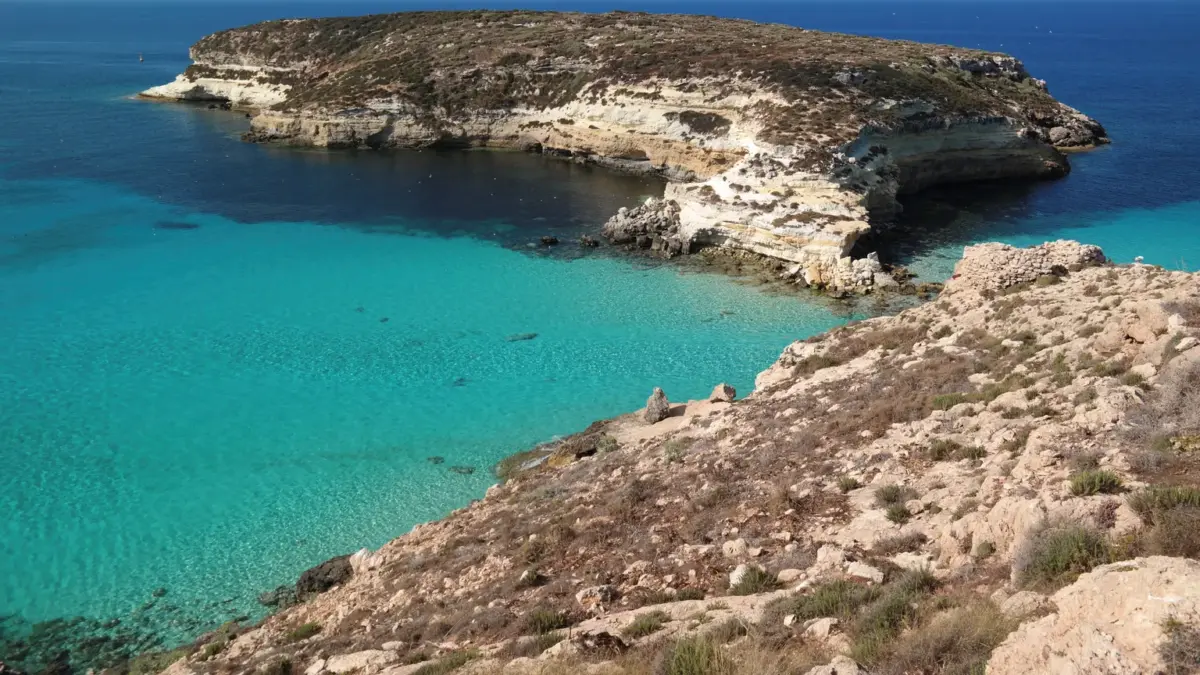
Lampedusa, USA News: The island of Lampedusa is Mediterranean holiday bliss, known for its sapphire seas and sandy beaches. But look beyond the palm trees and pleasure boats, and you’ll notice the signs of something darker. Month after month, bodies are found floating off Lampedusa’s coast. They are different nationalities, ages and genders, but all were migrants who drowned while travelling on dangerous small boats in a bid to reach Europe.
Situated between the tip of Africa and Italy, Lampedusa is a key landing point for these journeys, recording one of the highest rates of small boat arrivals anywhere in Europe. More than 20,000 people have arrived in Italy by sea this year alone, mostly through Lampedusa, which has just 5,000 inhabitants. From Italy, some continue to Germany, France or across the Channel to the UK, mostly seeking out relatives or a common language.
Last year, the central Mediterranean route – from North Africa to Southern Europe – was the most active migration route into the EU, continuing a long-term trend. Arrivals peaked in 2023, with more than 150,000 people making the journey. However, in the first nine months of this year, the number of arrivals through the central Mediterranean dropped to 22,500, a 56 per cent decline on the same point in 2025. This is thought to be down to a combination of tougher border policies from Italy and an increase in interceptions by Libya, from where most of the boats depart. The Libyan authorities are supported by the EU, despite being accused of involvement in the abuse of migrants.
At least 996 people have died on the central Mediterranean route this year alone, and in the last decade, the number recorded missing has reached nearly 27,000. This makes it the deadliest known migration route in the world. Shipwrecks around these coasts have become common – search and rescue ships are docked in the harbour next to yachts, and Red Cross ambulances are parked next to rented scooters. Last month, the humanitarian organisation Sea Watch dispatched a rescue boat in response to an alert about 40 people who were on a flimsy rubber boat, finding a deflated vessel with five people aboard and two bodies.
Nicola Dell’Arciprete is the head of Unicef in Italy, which supports many of the 4,400 children who have travelled to Italy unaccompanied this year. According to Unicef, 3,500 children and adolescents have died or gone missing attempting to cross the central Mediterranean migration route in the last decade. Those who survive the route are often severely dehydrated, suffering from hypothermia, or bearing chemical burns caused by leaking fuel mixing with saltwater.
Although successful crossings are broadly declining, Lampedusa still sees around four boats arriving every day during the week of visits. From the pier, arrivals are ushered onto minibuses and driven to a centre on the other side of the island called the Hotspot. The head of the centre, Imad Dalil, who works for the Italian Red Cross, notes that arrivals receive clothes, toiletries, and access to Wi-Fi to contact families. Most migrants stay on the island for just 24 to 48 hours before being moved by ferry or plane to Sicily.
Despite the boat arrivals, tourism on the island is booming, with more than 42,000 visitors in 2025 according to local tourism board data. Local businesses and tour operators report that the migrant arrivals do not deter visitors, highlighting a striking coexistence between the island’s booming holiday industry and the grim reality of the Mediterranean migration crisis.