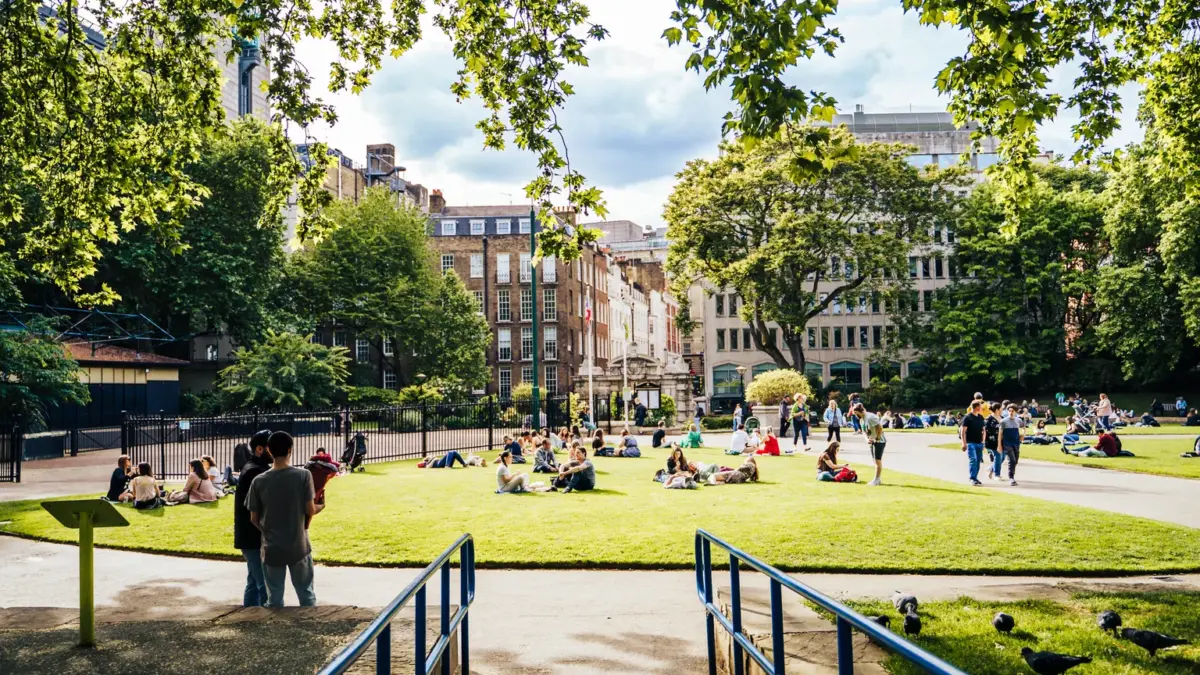
accessible green space, USA News (London): Thousands of neighbourhoods across England have less than an A4 piece of paper worth of accessible green space per person due to years of underinvestment, a new report reveals. Shared exclusively with The i Paper, the study by Friends of the Earth maps green areas across the country and highlights stark inequalities in access to parks, sports fields, and woodlands in cities including London, Hull, Wolverhampton, and Blackpool.
While the Government has promised improvements through an Access to Nature Green Paper, it has not set a publication date, prompting environmental groups to fear the initiative has been deprioritised. Friends of the Earth is urging the administration to establish new legal mechanisms empowering local communities to transform unused public land into food-growing areas, pocket parks, and wildlife havens.
Disparities Within Cities
Hull is among the urban centers identified as having critically low green space access. While the city averages 16.4m2 of accessible green space per person, that figure obscures sharp local disparities where 43 out of 168 neighbourhoods—representing 26 percent—possess no public green spaces whatsoever.
To combat this deficit, Friends of the Earth and the Co-Operative Bank have funded Postcode Gardeners in 17 regions, including Hull. John Pickles, the Postcode Gardener for Hull, noted that the challenge involves both the quantity and the quality of green areas in deprived zones. Pickles has collaborated with young offenders and NHS-referred patients dealing with anxiety and social isolation to establish allotments and flowerbeds on vacant land.
Three years ago, Hull became the first city in Britain to introduce a right to grow policy allowing communities to apply for permission to cultivate flowers and vegetables on unused public land. Friends of the Earth wants the Government to adopt this policy nationwide, alongside a legal requirement compelling local councils to account for green space inequalities during planning decisions.
Government Reforms and Response
Although the Government pledged to release an Access to Nature Green Paper within the current parliamentary term, ministers have declined to provide a timeline. The proposed green paper is anticipated to feature enhanced public access rights and provisions guaranteeing that all residents live within a 15-minute walk of a green or blue space. Environmental campaigners, however, caution that the absence of a schedule risks running out of time for meaningful legislative change.
Sienna Somers, senior nature campaigner at Friends of the Earth, stated that community greening transforms neglected areas into hubs of connection, but communities cannot compensate single-handedly for decades of underinvestment. A Defra spokesperson responded that the administration is restoring nature through historical investments, increasing green space access, creating three new national forests, and delivering nine new National River Walks alongside coast-to-coast routes and the 2,700-mile King Charles III England Coast Path.